
Demystifying Apache Iceberg’s widespread adoption
Authors:
Samiksha Saraf, Director of Technology
Ashish Kumar Dahiya, Senior Technical Architect
Gurvinder Arora, Senior Lead Technical Writer
In this inaugural part of our four-part series, “Future-proofing Data Architectures with Iceberg,” we unravel Apache Iceberg’s groundbreaking architecture, distinctive features, and advantages. Discover why this revolutionary table format is setting new standards for modern data lake ecosystems.
As businesses adapt to the digital landscape, transitioning to modern data lake architectures has become a crucial strategic focus. With its exceptional performance and scalability, Apache Iceberg has emerged as a popular choice for organizations aiming to build robust and efficient data lakes.
Apache Iceberg’s versatility extends across diverse industries, making it suitable for various applications. Businesses handling vast amounts of data, ranging from terabytes to petabytes, including e-commerce platforms, financial institutions, and healthcare organizations, can leverage Iceberg’s robust capabilities to gain a competitive edge.
Why is Apache Iceberg revolutionizing data lakes?
Apache Iceberg is a versatile open-source table format crafted to manage the complexities of extensive data lakes. Originating from Netflix’s quest to overcome the limitations of traditional formats like Hive and Parquet, Iceberg has gained widespread adoption in the data engineering field. It is tailored for distributed environments such as Hadoop and cloud storage, enhancing the efficiency of querying, updating, and managing large-scale datasets.
| What Iceberg is | What Iceberg is not |
|---|---|
| a table format | a storage system |
| A collection of APIs and libraries enabling engines to interact with tables adhering to the given instructions. | a querying engine |
| a managed service |
At the core of Iceberg lies its innovative table format that redefines data lake management. Unlike conventional data lake file structures that often lack robust schema enforcement, Iceberg tables introduce a structured and schema-aware design. This metadata layer enhances data organization, boosts query performance, and simplifies data management processes.
Unlocking the secrets of Iceberg’s cutting-edge architecture
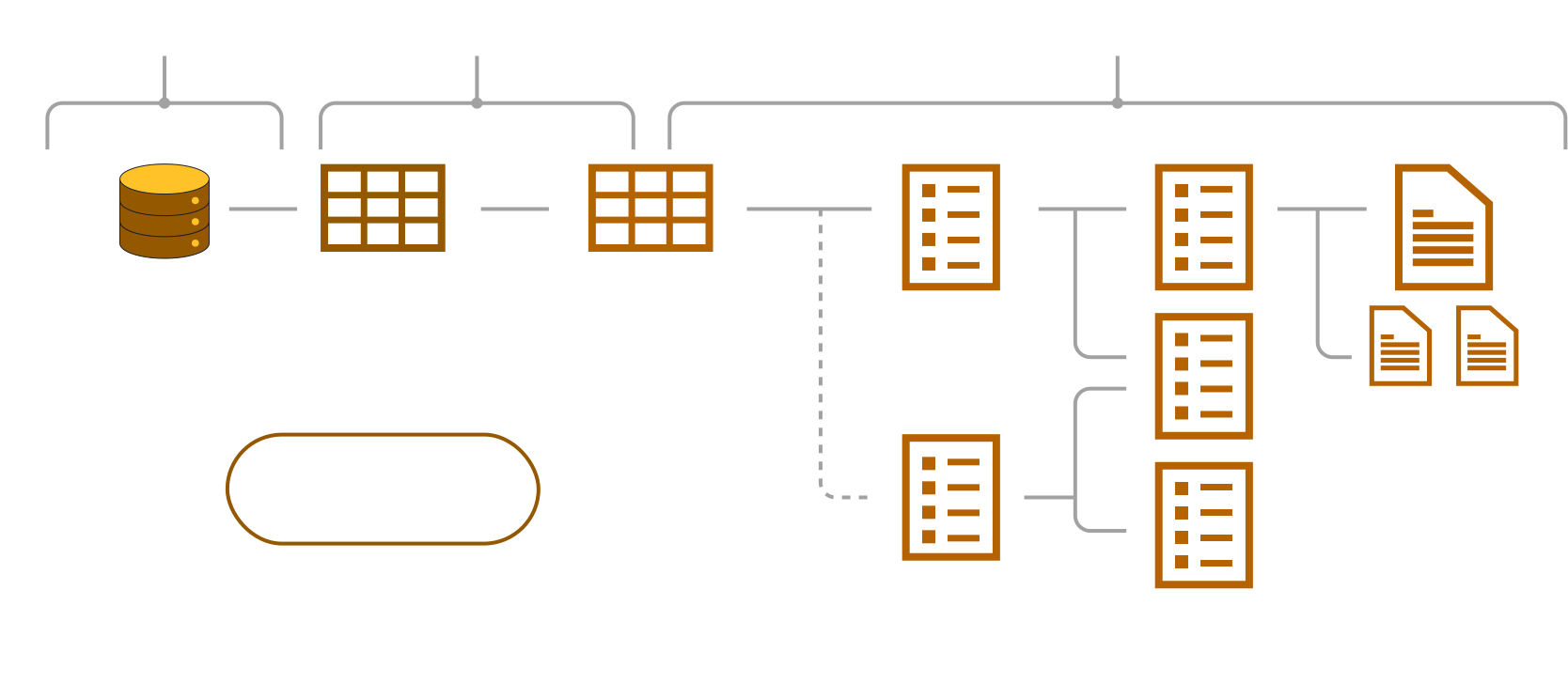
Let’s dive deeper into the architecture and specifications that empower Iceberg to tackle the myriad challenges that arise from scaling data, users, and applications. Iceberg’s innovative three-layer table design separates different aspects of table management to ensure unmatched performance, scalability, and flexibility. Here’s an in-depth look:
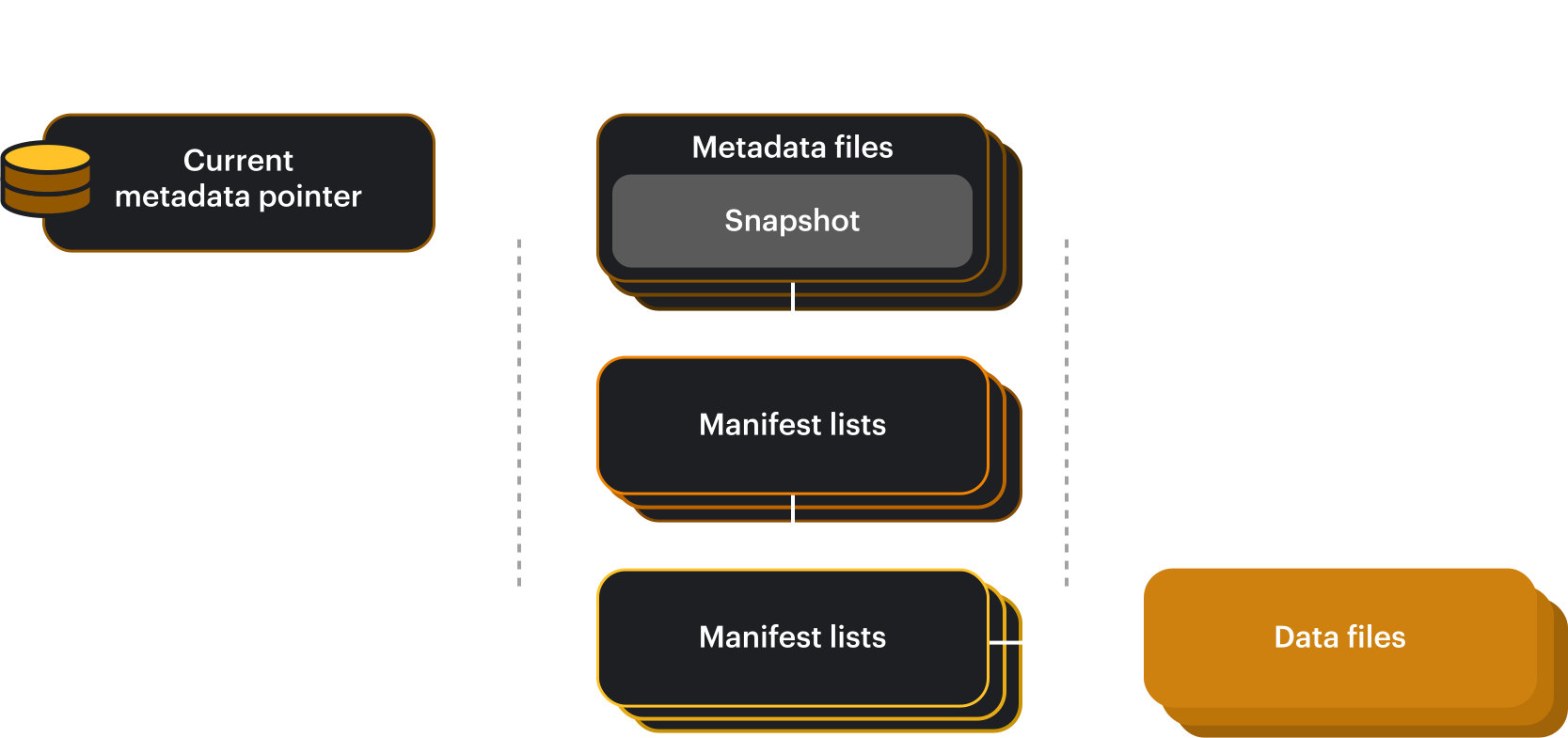
Catalog layer:
- Maintains a metadata pointer directing query engines to the current metadata file for each table.
- Ensures ACID compliance, offering a single source of truth.
- Creates a logical abstraction over the physical files for straightforward querying using SQL or other query languages.
- Significantly reduces query times and enhances data integrity.
Metadata layer:
- Comprises metadata files, manifest lists, and manifest files.
- Holds intricate details about the table’s schema, location, partitioning, snapshot timestamps, and more.
- Contains file-level metadata, including partition data, statistics, snapshot details, and file formats for each data file.
- Supports schema evolution, hidden partitioning, time travel, and advanced query optimization.
- Enables seamless schema evolution, making it robust for dynamic environments.
Data layer:
- Stores the actual data files, typically in formats like Parquet, ORC, or Avro.
- Optimized for large-scale reads and writes in storage solutions such as HDFS, AWS S3, or Azure Blob Storage.
- Ensures efficient handling of large volumes of data.
Game-changing features of Apache Iceberg
- Schema evolution: Iceberg facilitates seamless schema changes, allowing you to add, remove, or rename columns without the need to rewrite large datasets, ensuring data consistency and accessibility.
- Partition evolution: Iceberg’s dynamic partitioning adapts to evolving data characteristics without the need for full dataset reorganization. It supports advanced strategies, including range, hash, list, and truncate partitioning, enhancing query performance and data management.
- Time travel: Iceberg allows historical data states to be queried at specific points in time, proving invaluable for debugging, auditing, and rollback operations.
- Snapshot management: Iceberg excels in snapshot management, maintaining meticulous historical versions. It supports the creation of branches and tags, providing granular version control and ensuring data integrity across operations.
- Efficient reads and writes: The metadata layer of Iceberg optimizes query performance by reducing the data scan footprint, supporting efficient data pruning, and accelerating analytical workloads.
- ACID transactions: Iceberg guarantees atomicity, consistency, isolation, and durability (ACID) for reliable concurrent data operations, providing robust transactional guarantees and maintaining data integrity.
- Multi-engine support: Iceberg is compatible with engines like Apache Spark, Apache Flink, Trino, Presto, and Hive, allowing seamless integration into data pipelines, thereby fostering a versatile and flexible data ecosystem.
- Efficient data compaction: Iceberg significantly reduces storage overheads and enhances read operations by merging smaller files into larger ones. Users can choose from different rewrite strategies like bin-packing or sorting to optimize file size and layout.
- Internal partition management: Iceberg automatically manages partitions, optimizes queries, and prevents full table scans. This automated handling improves performance and reduces operational complexity.
- Multiple file formats: Iceberg’s compatibility with Apache Parquet, Avro, and Apache ORC allows easy integration with existing data systems and workflows, providing flexibility and interoperability.
- Enhanced metadata management: Iceberg’s layered metadata approach utilizes manifest files, lists, and metadata files to streamline query planning and execution. This design avoids costly operations like file listing and renaming, enhancing performance and efficiency.

Top 5 reasons why Apache Iceberg is revolutionizing large-scale data lake management
- Streamlined and cost-effective data management: Apache Iceberg offers a structured approach to organizing and evolving datasets, simplifying data management. Its ability to version data without disrupting existing structures helps businesses easily adapt to changing needs. This simplicity reduces development and maintenance efforts, allowing teams to focus on insights rather than data complexities. Additionally, Iceberg enhances file compression and compaction, lowering cloud storage costs.
- Enhanced query performance: Iceberg’s columnar storage format and ACID transaction support boost query performance. This leads to faster data access for analytical workloads, enabling quicker decision-making in dynamic business environments.
- Seamless ecosystem integration: Designed for easy integration with existing data lakes, Apache Iceberg works well with various engines and cloud services, including Apache Spark, AWS Athena, AWS Redshift, Google BigQuery, Snowflake, and Microsoft Azure Synapse Analytics, giving businesses flexibility in managing and analyzing their data.
- Transparent data evolution: Iceberg’s versioning capabilities provide transparency and traceability in data evolution. Metadata tables record changes, offering a historical overview that aids troubleshooting and ensures compliance with regulations.
- Improved security and scalability: Iceberg addresses security and scalability needs with robust features and scalable metadata management as data volumes grow. Separating metadata from data allows independent scaling of metadata operations, meeting the demands of large-scale environments while maintaining security.
Apache Iceberg offers a cutting-edge solution for managing data lakes with its schema evolution, time travel, and efficient compaction. As data becomes more critical, adopting technologies like Iceberg is vital for staying competitive.
Stay tuned for our next blog to explore the top migration challenges and key architectural considerations when transitioning to Iceberg Data Lake.

